In this second workshop, we will continue to explore the dynamic mode of seeing implicit in Goethe’s way of understanding Nature. Although world-renown as a great German poet and philosopher of the Romantic era, Johann Wolfgang von Goethe (1749-1832) was also an accomplished scientist who contributed to many fields, including botany, morphology (a term he coined), weather study, and color theory. Rudolf Steiner recognized the potential in Goethe’s way of meeting the world when, as a young man, he had the task of editing Goethe’s collection of scientific writings. Subsequently, Steiner wrote books and gave numerous lectures on Goethe’s way of science, and as a tribute even named the Anthroposophical headquarters in Dornach, Switzerland, the “Goetheanum.”
We will review:
1. What Goethe implied by the “Archetype,” and explore
2. How Goethe’s idea of Metamorphosis is expressed within the world of animals,
3. Goethe’s Principle of Compensation,
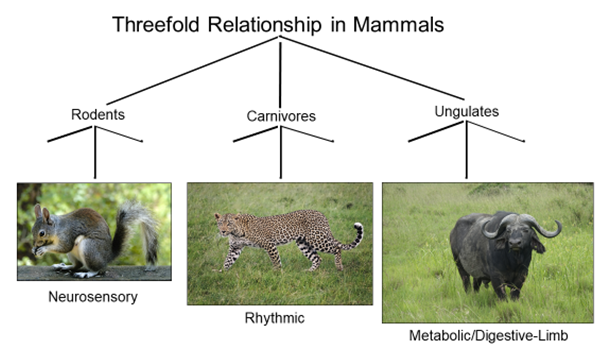
4. How Rudolf Steiner further developed Goethe’s notion of polarity into the idea of Threefoldness, and
5. How biologist Wolfgang Schad applied the idea of Threefoldness as a lens to understanding the great diversity of living mammals.
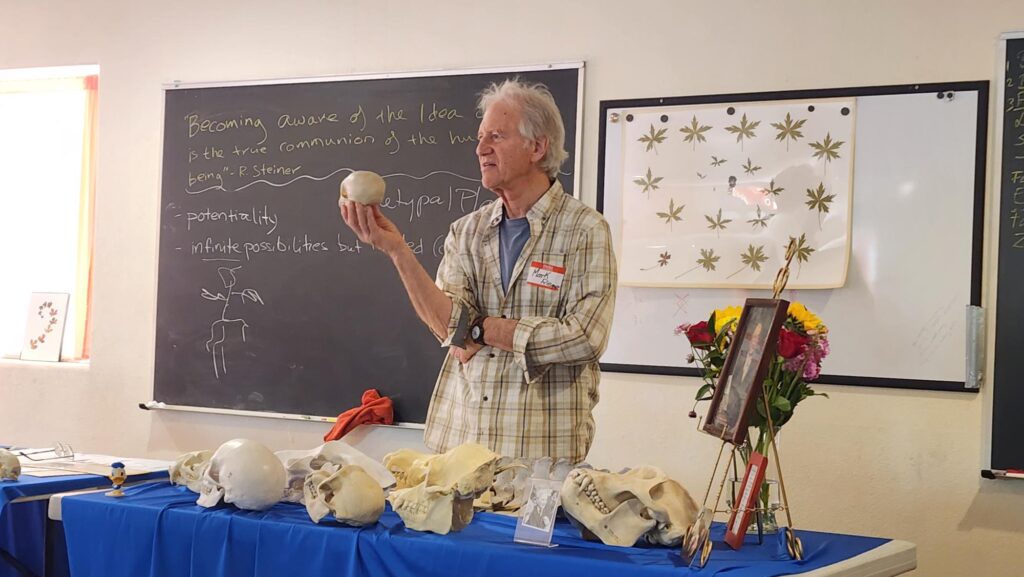
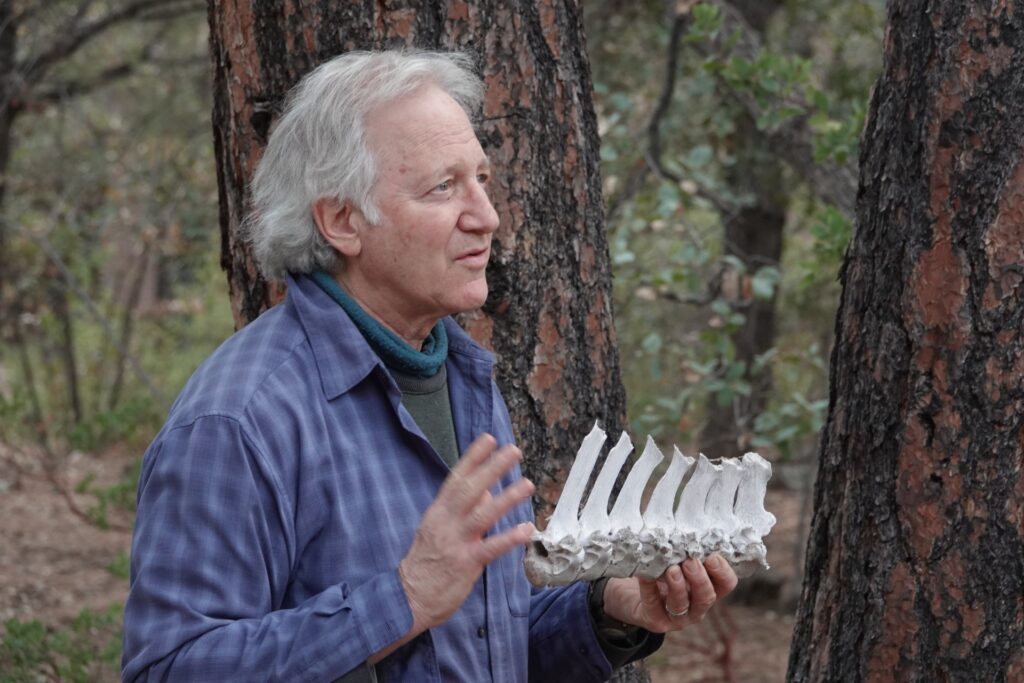
During this day, we will view dozens of projected animal images, observe a collection of authentic and plastic animal skulls, and engage in basic sketching and clay modeling exercises.